03PRODUCT CONTENT / FICTIONAL CONCEPT
From product facts
to a consistent page.
A hypothetical workflow for turning supplied product data and approved assets into a clear, reviewable content batch.
Luma Fern, its products, and all sample data are fictional. This demonstrates an approach to the work; it does not describe a client engagement.
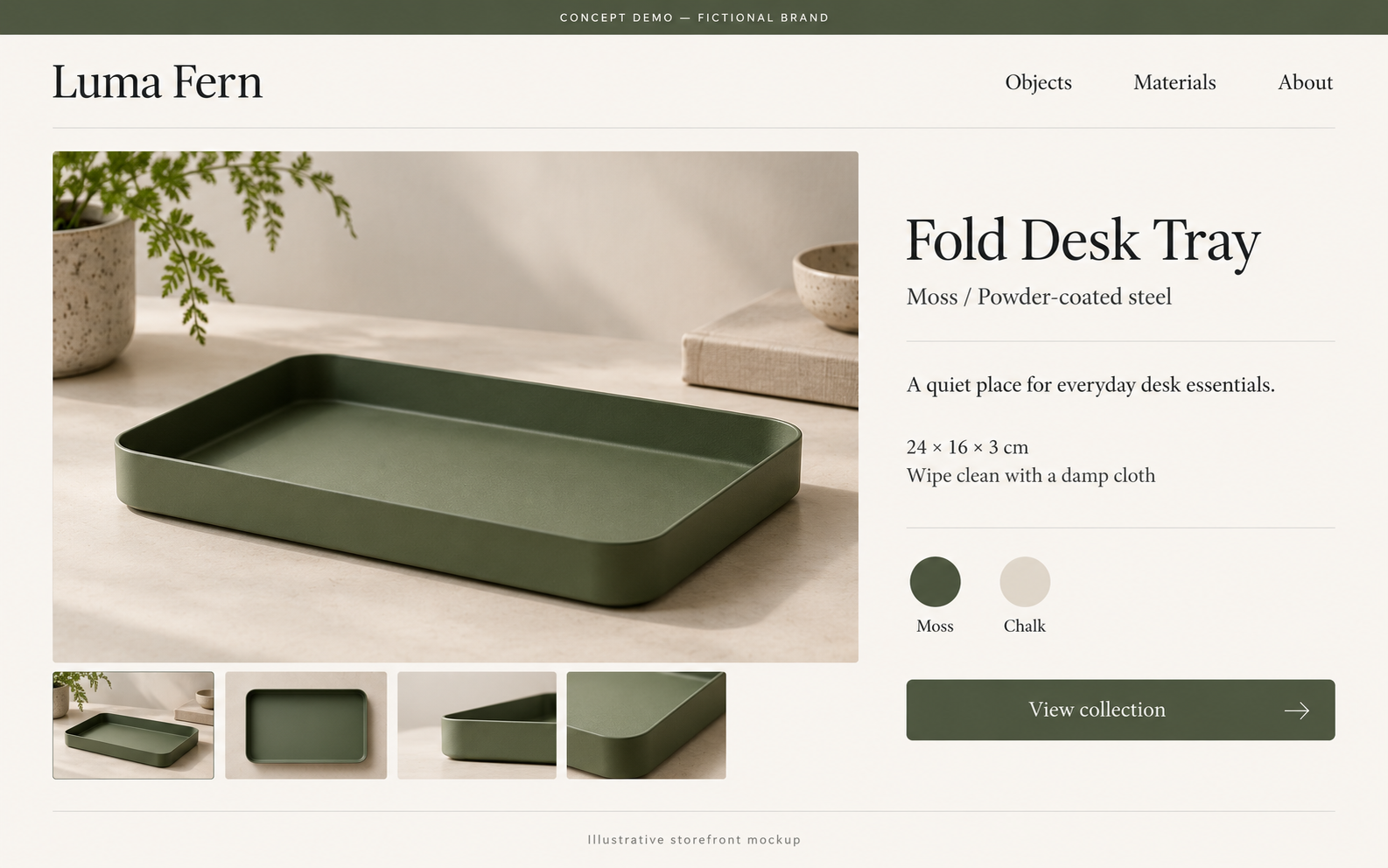
Imagine a small home-accessories collection arriving as a spreadsheet, image folder, and a short brand brief. Product names use different formats, dimensions need consistent units, and a few fields are missing.
The task is to organize the supplied information into a repeatable page structure: a readable description, scannable specifications, useful image alt text, and a list of questions for the owner.
Try the sample workflowEXPLORE THE SAMPLE
One record. A consistent content set.
Choose a fictional color variant and follow it through the preparation steps.
Moss sample. Showing source facts.
Start with supplied facts.
This fixed sample stands in for a supplier sheet or product brief. The two records use the same field structure.
- Keep the SKU with every output.
- Normalize units and naming consistently.
- Leave missing facts empty and flag them.
fold tray / moss
- Identifier
- DEMO-LF-FOLD-MOS
- Material
- Powder-coated steel
- Dimensions
- 240 / 160 / 30 mm
- Finish
- matte moss green
- Care
- Wipe clean with a damp cloth
View the source JSON
{
  "record_type": "fictional_demo_data",
  "sku": "DEMO-LF-FOLD-MOS",
  "supplier_title": "fold tray / moss",
  "dimensions_mm": [
    240,
    160,
    30
  ],
  "material": "powder-coated steel",
  "color": "Moss",
  "form": "rectangular tray; shallow sides; rounded corners",
  "finish": "matte moss green",
  "care": "wipe clean with a damp cloth",
  "image_brief": "One matte moss green tray, angled view, neutral background",
  "price": null,
  "item_weight": null,
  "warranty": null
}FROM INPUT TO HANDOFF
A careful content-production process.
Normalize the source
Keep product identifiers intact. Standardize names, units, and field order. Record missing or contradictory facts instead of filling them with guesses.
Prepare consistent drafts
Use a shared structure for descriptions and specifications. Match each approved image to its variant and write alt text for what that image actually shows.
Review before publishing
Deliver the copy, source references, and unresolved questions together. The owner confirms the facts and approves a page preview before anything goes live.
WHAT A BATCH COULD INCLUDE
Useful, inspectable outputs.
A scope can be agreed around the materials and destination you already use.
- A product record tied to each SKU and variant
- Descriptions and a consistent specification table
- Image mapping and alt-text drafts
- An exceptions list and an approval-ready review packet
Send an approved source record, the images you have permission to use, and a reference page or catalog format. Add tone-of-voice guidance and any fields the store requires.
For Shopify or another catalog platform, field mapping and a store preview would be separate, agreed steps. This demo exports a generic review packet and does not connect to a store.